
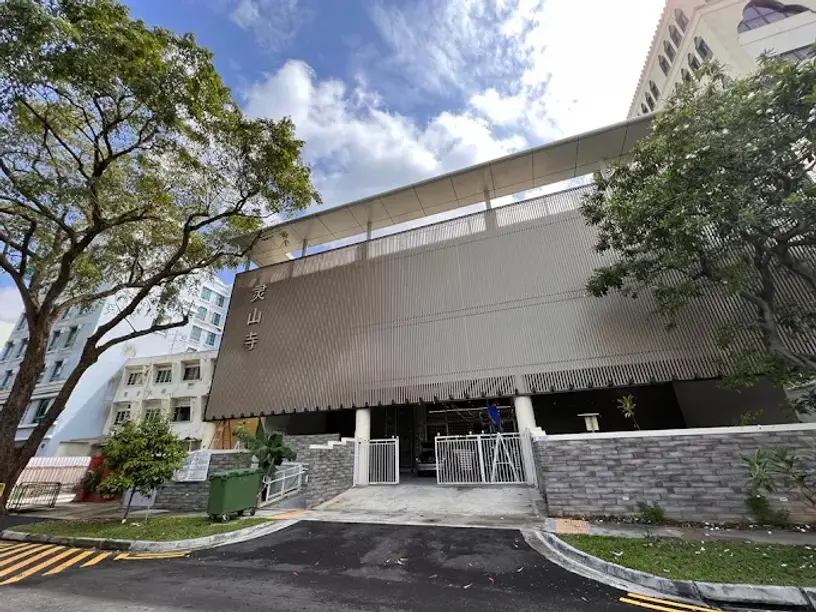

LinSan Temple Freehold Columbarium:
LinSan Temple, Singapore – Historical Overview:
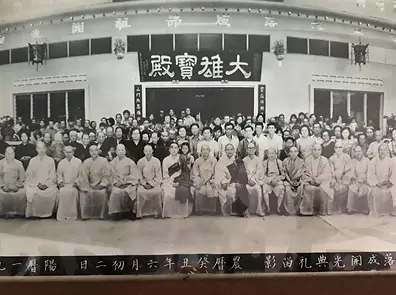
1930s — Founding
Ling Shan Temple was founded by Master Rui Xiang, a Hakka monk from Guangdong.
Its main mission was to propagate Buddhism, conduct Buddhist ceremonies, and serve the local Chinese community.
1960s — Passing of the original abbot / Handover to other monks
Master Rui Xiang passed away.
The temple's management was transferred to Venerable Seang Heng and Venerable Ming Zhen.
Under their leadership, the temple continued to serve the faithful and hold Buddhist activities.
1973 — Large-scale reconstruction
Venerable Seang Heng oversaw a large-scale reconstruction.
The reconstructed temple was revitalized and attracted more followers.
This period saw Ling Shan Temple actively conduct Buddhist lectures and participate in charitable, educational, and community activities, marking one of its most prosperous periods.
1990–Early 2000s — Structural damage / Deemed unsafe
The temple buildings aged and developed structural problems.
Due to safety concerns and insufficient funding, the reconstruction project was forced to halt.
The temple gradually came to a standstill, unable to be rebuilt smoothly for nearly 20 years.
The Last Wish of Venerable Changheng
Venerable Changheng had always hoped to complete the reconstruction and restore the temple to its former glory.
Although encountering significant obstacles, the devotees and management team persevered in their efforts to push forward the reconstruction.
March 2023 — Ling Shan Temple Reconstruction Completed / Grand Inauguration
After nearly 20 years of effort, Ling Shan Temple was finally successfully rebuilt.
The new temple held its inauguration ceremony on March 12, 2023.
Representatives from the Singapore government and various sectors were invited to attend.
The new temple features a brand-new modern design, with a solemn, clean, and fully air-conditioned environment.
Ling Shan Temple Today
Buddhist rituals, prayers, chanting
columbarium niches
ancestral tablets
rituals for the deceased, ancestor worship, and commemoration
Freehold ownership, deeply trusted by the local Chinese community.
Combining traditional Buddhist culture with modern worship facilities, it is one of the important Buddhist temples in Singapore.



Feng Shui of Linsan Temple

Linsan Temple is laid out according to the main feng shui principles of "peace, stability, and continuity." The three-story building has an open and spacious atmosphere, and the core principles of symmetry and unobstructed flow ensure that the spaces for ancestor worship and the burial of ancestors maintain a stable and peaceful energy flow.
Overall layout: three-layer structure, with an upward-flowing energy field.
The first and second floors are the main hall: The main hall has a high ceiling, and the two-story space allows the air to flow smoothly without stagnation, symbolizing "power reaching the heavens", which is an auspicious sign for the deceased and their family.
The third floor is the future expansion area: leaving space symbolizes "room for the family", the main fortune is not suppressed, and the feng shui of the whole building presents an image of "vitality above".
The temple uses a full air conditioning system, which keeps the environment constant, stable, and dry. In terms of feng shui, this is considered to be a "peaceful energy field," which is conducive to the rest of the ancestors and also makes visiting family members feel comfortable.
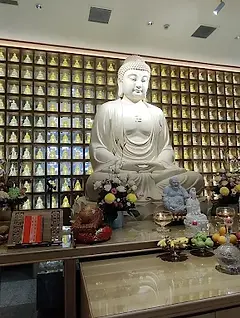
Main Hall Layout: A Buddha Statue Welcomes Visitors and Brings Peace of Mind. Upon entering the main hall of Lingshan Temple, one is immediately greeted by a two-story-high Buddha statue directly opposite the entrance. The centrally located and tall Buddha statue forms a feng shui arrangement of "sitting in the central palace, protecting the four directions." Facing the entrance, the Buddha statue symbolizes guidance and protection, giving every arriving family member a sense of peace. Behind the Buddha statue extends three main halls, forming a three-palace layout, symbolizing the harmony of heaven, earth, and humanity.
The ancestral hall is not yet open to the public and is being preserved for future development.
From a feng shui perspective, having provisions means having a future, symbolizing that both the family and the temple have "continuous fortune".
Ancestral Hall Two: The ancestral tablet hall comprises fifteen tiers, forming a vertical symbol of "long-lasting continuity." The first to sixth tiers are at eye level and are therefore the most popular among family members. The tablets are decorated with colored glazes, symbolizing: steadfastness (like a rock) and enduring family filial piety and gratitude. Each ancestral tablet can be engraved with up to four names, and photos can be added, offering high flexibility and ensuring the family's ancestral tablets appear complete and unified. The fifteen tiers extend upwards, symbolizing "layers of ancestral virtue and endless blessings."
The third ancestral hall, the columbarium, comprises nine tiers, symbolizing "the ninefold lotus realm and perfect rebirth." Each door panel features a small Buddha statue seated on a lotus pedestal, signifying that the deceased find peace and the living find solace. The fourth to sixth tiers are the most popular, as they are at natural eye level and considered the "central auspicious position," easy to visit and symbolizing "stable vital energy." The three halls are arranged in a harmonious and orderly fashion, with the front hall welcoming blessings, the middle hall stabilizing energy, and the rear hall maintaining tranquility, ensuring a continuous and peaceful flow of energy throughout the entire temple.
Lingshan Temple has a three-tiered structure, with an upward and continuous energy flow. Buddha statues guard the central hall at the entrance, creating a stable layout. The ancestral halls are clearly divided, with a proper balance between active and quiet areas.
The main ancestral tablets and columbarium niches are located in a prominent, easily visible spot, facilitating family visits and providing peace of mind. The environment is temperature-controlled, quiet, and conducive to tranquility.


Linsan Temple Chanting, Sacrificial Rites, and Prayer Ceremony:
.webp)


.webp)

.webp)


Lingshan Temple Chanting and Prayer Ceremony


At Lingshan Temple, the chanting and sacrificial ceremonies are based on Buddhist traditions, with compassion, tranquility and solemnity as the main themes, aiming to pray for the deceased, comfort the families, and continue filial piety.
1. Offerings and prayers: Families express their sentiments with simple offerings such as flowers, incense, tea, and water. The monks lead prayers for the deceased to rest in peace and for the family to be safe and sound.
2. The master recites the Amitabha Sutra, the Heart Sutra, or related Buddhist mantras according to tradition to accumulate merit for the deceased and help them be reborn in a good place.
3. Dedication and Prayer: Dedicate the merits of chanting to ancestors and family members, praying for their increased blessings and wisdom, and for peace of mind and body.
4. After the Buddhist ceremony, family members join their palms in prayer to the Buddha, completing the entire ceremony with gratitude, remembrance, and blessings.
• Quiet and solemn environment, fully air-conditioned for comfort. • Led by a Buddhist monk, the process is standardized and completed. • Suitable for occasions such as ancestor placement, memorial services, anniversaries, Qingming Festival, and Ghost Festival. • Allowing ancestors to rest in peace and giving peace of mind to family members.
Linsan Temple Freehold - Columbarium:
In Singapore, freehold columbarium niches are extremely rare, symbolizing true eternal rest and the passing down of blessings through generations. Ling Shan Temple offers these freehold niches with a solemn and serene Buddhist atmosphere, modern spatial design, and a limited number of unique options, providing the most comprehensive and reassuring lifelong well-being for our ancestors.
Lingshan Temple, based on the Buddhist spirit of compassion, provides for the ancestors:
-
Perpetual placement, no time limit
-
Offerings are made before the Buddha, and incense and lamps are lit continuously.
-
A solemn and peaceful environment for practice
-
Chanting and Praying for Blessings
-
Convenient for descendants to worship, and the environment is quiet.
May our ancestors find peace of mind, body, and soul; and may future generations be able to safeguard the family line with peace of mind.


To commemorate and honor our beloved relatives, the columbarium will thoughtfully provide a precious urn with the purchase of your niche, as a token of our respect for our ancestors.
The amber and glass urn placed in the first-floor altar is crafted with exquisite craftsmanship. Its texture is clear and warm, and its quality is stable and durable, symbolizing light and peace.
The jade urn with lotus blossoms, presented as a gift with the third-floor altar, is a high-end choice for our hall. The jade is elegant and understated, with a warm and smooth feel, symbolizing peace and eternity. Its durability and taste further demonstrate the deepest respect for our ancestors.
Each urn is not only a dignified vessel for holding ashes, but also a way to express our remembrance of loved ones, enhance the solemnity of the memorial tablet, and represent our commitment to safeguarding the peace of your family with professionalism and sincerity.
May the most meticulous hospitality provide a place for remembrance and ensure that respect endures forever.


Freehold columbarium niches in Singapore are extremely scarce. The limited number of freehold columbarium niches available at Ling Shan Temple are highly valuable and widely recognized by believers.
Ancestral Hall 1 & Ancestral Hall 3 (Double Columbarium Space): Included with the purchase of a double columbarium space in Ancestral Hall 1 or Ancestral Hall 3.
-
Two yellow beeswax urns (free)
-
Natural beeswax material
-
Warm texture and elegant color
-
Symbolizing completeness, peace and harmony
Imperial Garden (Double columbarium niche)
Purchase a double columbarium niche at the Imperial Garden and receive the following as a gift:
-
Two hibiscus jade urns (free)
-
Hibiscus jade symbolizes good fortune and protection.
-
Its delicate texture symbolizes nobility and tranquility.
Linsan Temple Freehold -Ancestral Tablets:


All ancestral tablets in this temple are registered under permanent land deeds, aiming to provide families with lasting peace and security. The tablets are elegantly designed, complementing the temple's tranquil and solemn environment, creating a harmonious and dignified atmosphere for worship and remembrance of ancestors. The abbot conducts daily morning and evening chanting rituals, offering constant blessings and dedicating merit to all ancestors, increasing their blessings and wisdom.

Lin San Temple boasts a serene and elegant environment, ideal for quiet contemplation, ancestor worship, and reflection. Families visiting the temple can rest assured that their ancestors will be respectfully remembered in this solemn and sacred space. The ancestral tablets set up in the temple are meticulously designed, serving not only as a place of remembrance but also as a symbol of enduring heritage, a precious symbol connecting the past and present and promoting family traditions.
Why choose Linsan Temple?
Linsan Temple has established a permanent property for its devotees, ensuring that prayers and merits are passed down through generations. The temple also features air-conditioned worship rooms, providing a serene, solemn, and comfortable environment for families to visit and pay their respects at any time. Highly respected monks reside at the temple, performing authentic rituals to chant sutras, pray for the deceased, and dedicate merit to their souls, thereby increasing their blessings and protecting the prosperity of future generations.
The temple also offers flexible installment payment options, allowing every sincere wish to be fulfilled with ease.
Linsan Temple not only symbolizes the accumulation of blessings, but also serves as a place of peace of mind and a lasting refuge.



I. Perpetual Property Rights
The ancestral tablets set up at Lingshan Temple are all on permanent land deeds, ensuring that ancestors can be enshrined for a long time and providing their families with a stable and lasting place of peace and security.
II. Installment Payment
Our temple offers installment payment options, allowing families to complete the enshrinement process in a more relaxed and secure manner, reducing their financial burden and providing comprehensive care.
III. Solemn Faith
Lingshan Temple has a serene and solemn environment. The abbot chants sutras every morning and evening, dedicating the merits according to orthodox rituals, praying for the ancestors and protecting them, which reflects the solemnity and permanence of faith.
IV. Harmony and Tranquility
The temple boasts a harmonious and tranquil atmosphere, making it an ideal place for families to pay their respects, remember loved ones, and find peace. It not only serves as a sanctuary for ancestors but also creates a serene space that connects tradition with the soul.